
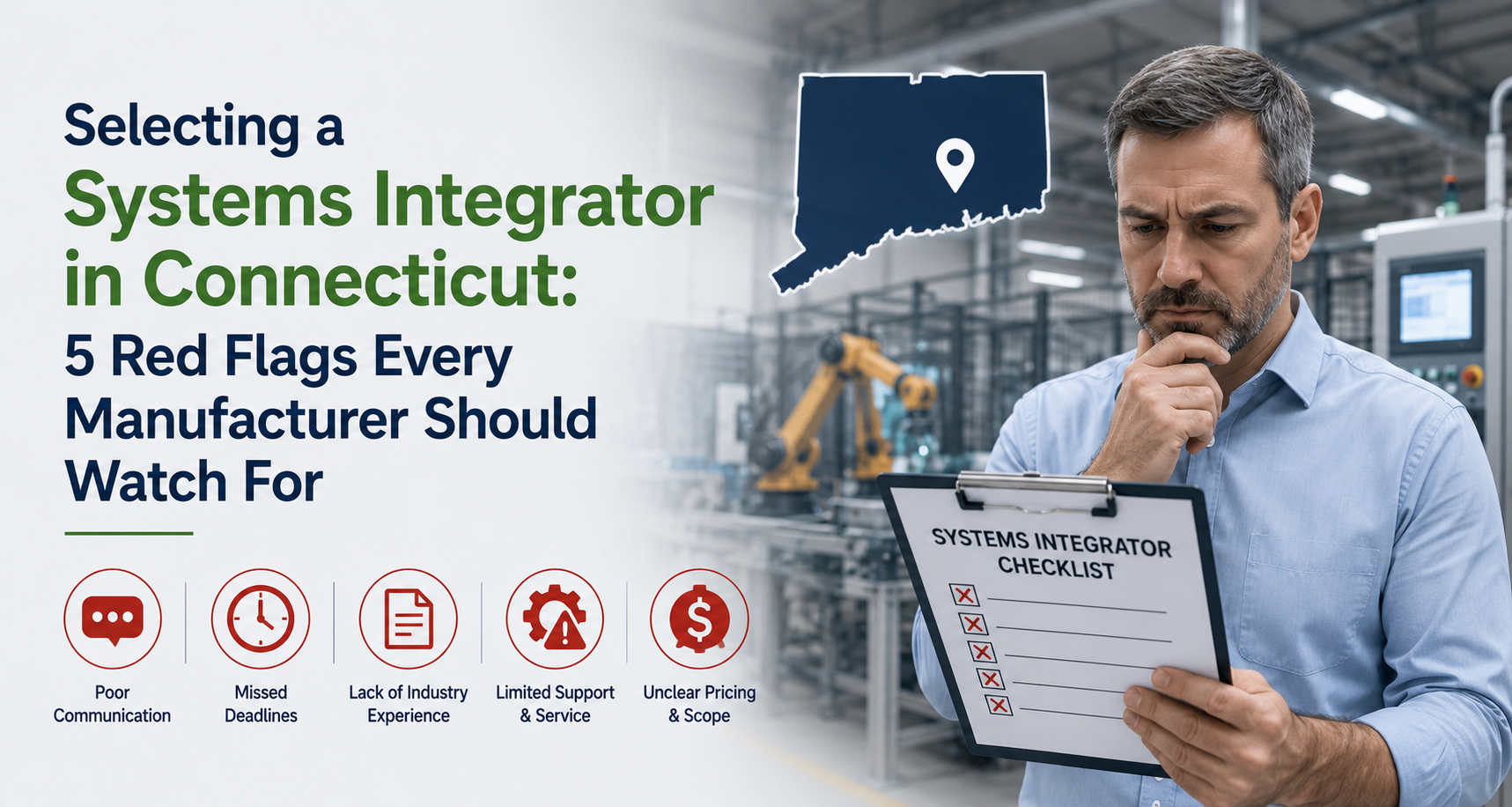
Selecting a Systems Integrator in Connecticut: 5 Red Flags Every Manufacturer Should Watch For
Executive Summary
Whether you’re upgrading legacy PLCs, implementing an Ignition SCADA platform, or modernising your production line, choosing the right systems integrator is one of the most important decisions you’ll make. A qualified integrator doesn’t just install software—they become a long-term partner who helps improve productivity, reduce downtime, and ensure your automation systems can scale with your business.
However, not all integrators have the same level of expertise. Selecting the wrong partner can lead to project delays, budget overruns, poor system performance, and costly rework.
If you’re evaluating Ignition systems integrators in Connecticut or planning a new automation project, understanding the warning signs early can help you avoid unnecessary risks and ensure a successful implementation.
Why Choosing the Right Systems Integrator Matters
Manufacturing environments are becoming increasingly connected. Modern facilities rely on PLCs, SCADA, MES, industrial networks, and ERP systems working together to deliver real-time visibility and operational efficiency.
A skilled systems integrator ensures these technologies communicate seamlessly while designing solutions that are reliable, secure, and scalable. They also understand industry regulations, production processes, and future expansion requirements.
The right partner helps you achieve:
- Reduced production downtime
- Better process visibility
- Scalable automation architecture
- Faster return on investment (ROI)
- Long-term technical support
The wrong partner, however, can leave you with fragmented systems, inconsistent data, and expensive maintenance challenges.
Red Flag #1: Limited Experience with Your Industry
Industrial automation isn’t one-size-fits-all. A systems integrator who primarily works in commercial buildings or utilities may not understand the unique challenges of food and beverage, pharmaceuticals, aerospace, or precision manufacturing.
Each industry has different compliance requirements, production workflows, and operational priorities.
For example:
- Food manufacturers require hygienic process control and traceability.
- Pharmaceutical plants demand strict validation and audit trails.
- Aerospace manufacturers rely on high-precision production monitoring.
Before selecting an integrator, ask about their experience with projects similar to yours and request relevant case studies or references.
Red Flag #2: Lack of Expertise in Ignition SCADA
As more manufacturers adopt Ignition SCADA, it’s important to choose a partner with proven experience implementing the platform.
A qualified Ignition SCADA integrator should understand:
- Ignition architecture
- PLC communications
- Alarm management
- Historical data collection
- Dashboard development
- MQTT integration
- Multi-site deployments
- Cybersecurity best practices
They should also be familiar with the Ignition Integrator Program, demonstrating a commitment to best practices and ongoing platform expertise.
Choosing an experienced Inductive Automation integrator reduces implementation risks and ensures your SCADA system is designed for long-term scalability.
Red Flag #3: They Focus Only on Installation, Not Long-Term Growth
Many automation projects fail because they are designed only to solve today’s problems.
A reliable systems integrator plans for future expansion by considering:
- Additional production lines
- New manufacturing facilities
- MES integration
- ERP connectivity
- Cloud reporting
- Predictive maintenance
- Industrial IoT initiatives
Your automation system should evolve with your business, not require a complete redesign every few years.
When evaluating providers offering SCADA system solutions, ask how they approach scalability and future upgrades.
Red Flag #4: Weak Integration Capabilities
Today’s manufacturing facilities depend on multiple technologies working together.
Your systems integrator should be capable of integrating:
- PLCs
- SCADA platforms
- MES software
- ERP systems
- SQL databases
- Industrial networks
- Remote monitoring solutions
- Cloud-based analytics
Strong automation and SCADA integration eliminates data silos and improves operational visibility across your facility.
If an integrator recommends replacing every existing system instead of integrating where appropriate, consider it a warning sign. A knowledgeable partner will identify opportunities to maximize your current infrastructure while modernizing your operations.
Red Flag #5: No Ongoing Support or Optimization
Industrial automation isn’t a one-time project.
As production demands change, your systems require:
- Software updates
- Performance optimization
- Security improvements
- Operator training
- New equipment integration
- Remote troubleshooting
A reputable systems integrator offers long-term support rather than disappearing after project completion.
Before signing a contract, ask:
- Do they provide remote support?
- What are their response times?
- Is preventive system maintenance included?
- Can they assist with future expansion?
A long-term service relationship often delivers greater value than selecting the lowest-cost proposal.
Questions Every Manufacturer Should Ask Before Hiring a Systems Integrator
Use this checklist during your evaluation process:
| Question | Why It Matters |
| Have you completed projects in my industry? | Demonstrates relevant experience. |
| Are you experienced with Ignition SCADA? | Ensures platform expertise. |
| Can you integrate with our existing PLCs? | Reduces unnecessary replacement costs. |
| How do you approach cybersecurity? | Protects operational technology (OT) environments. |
| Do you provide post-installation support? | Ensures long-term system reliability. |
| Can the solution scale with future growth? | Supports business expansion without major redesigns. |
These questions help identify whether an integrator is focused on delivering a long-term solution rather than simply completing a project.
Why Local Expertise Matters
Working with a local automation partner offers several advantages. Manufacturers often benefit from faster response times, on-site support, and a better understanding of regional industries and operational requirements.
For businesses looking for PLC electrical solutions in Connecticut or industrial automation services, a local partner can provide hands-on support during commissioning, troubleshooting, and system upgrades. This proximity also makes collaboration easier throughout the project lifecycle.
Rather than choosing an integrator based solely on price, evaluate their technical expertise, responsiveness, and ability to support your business over the long term.
What Sets a High-Quality Systems Integrator Apart?
The best automation partners go beyond programming PLCs or configuring SCADA screens. They take the time to understand your production goals, identify inefficiencies, and recommend solutions that improve productivity and reliability.
Look for an integrator who can:
- Design scalable automation architectures.
- Deliver intuitive operator dashboards.
- Integrate SCADA, PLCs, MES, and ERP systems.
- Improve production reporting and analytics.
- Provide ongoing training and technical support.
- Recommend future-ready technologies without unnecessary complexity.
These capabilities ensure your automation investment continues to deliver value as your manufacturing operations grow.
Conclusion
Selecting the right systems integrator is about more than technical skills—it’s about choosing a partner who understands your industry, aligns with your long-term goals, and can support your automation journey from planning through optimization.
Whether you’re implementing SCADA software, upgrading an Ignition control system, or expanding production across multiple facilities, taking the time to evaluate potential partners can save significant time and cost in the future.
For manufacturers across Connecticut, working with an experienced industrial automation provider ensures your automation systems are reliable, scalable, and built to support operational excellence.
Frequently Asked Questions
How do I choose the right systems integrator?
Look for industry experience, expertise with SCADA and PLC systems, strong integration capabilities, proven project success, and long-term support services.
Why is Ignition SCADA popular among manufacturers?
Ignition offers an open, scalable platform that integrates with multiple PLC brands, MES systems, ERP software, and industrial databases, making it suitable for facilities of all sizes.
What should I ask before hiring an automation partner?
Ask about industry experience, certifications, previous projects, cybersecurity practices, post-installation support, and how they design systems for future expansion.
Can a systems integrator modernize existing automation systems?
Yes. Experienced integrators can often upgrade legacy automation infrastructure by integrating modern SCADA platforms and software without replacing all existing equipment.
Why work with a local systems integrator in Connecticut?
A local partner provides faster on-site support, understands regional manufacturing challenges, and can respond more quickly during commissioning, maintenance, or emergency situations.