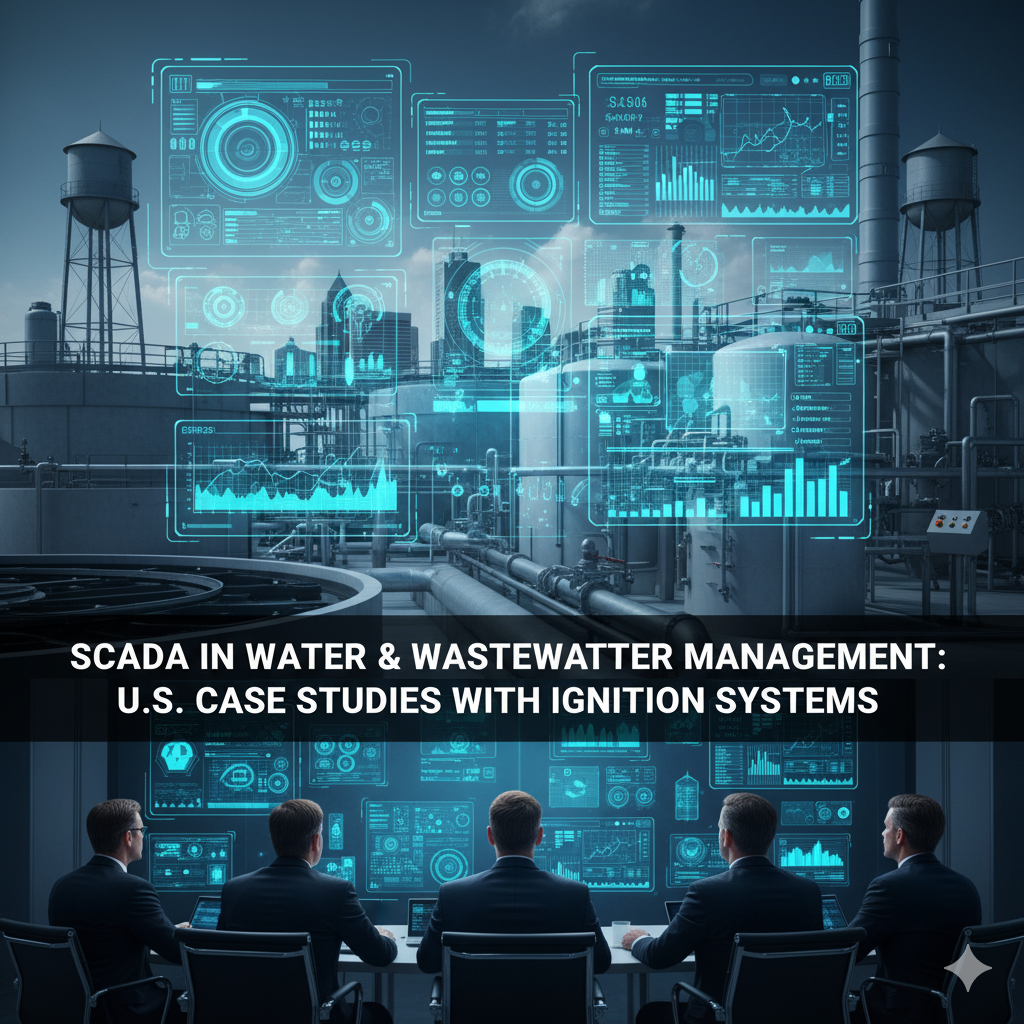
SCADA in Water & Wastewater Management: U.S. Case Studies with Ignition Systems
Introduction
Water and wastewater utilities in the U.S. face mounting challenges aging infrastructure, stricter EPA compliance requirements, cybersecurity threats, and rising operational costs. To meet these demands, many utilities are turning to SCADA (Supervisory Control and Data Acquisition) platforms like Ignition by Inductive Automation.
Ignition offers real-time monitoring, machine analytics, and reporting capabilities that empower operators to optimize performance, improve safety, and reduce costs across municipal and industrial water systems.
Why SCADA Matters in U.S. Water & Wastewater Management
Water utilities need reliable, secure, and scalable automation systems. SCADA systems provide:
- Real-time visibility into pumps, tanks, and treatment processes
- Remote control for operators across distributed facilities
- Machine reporting & datalogging for compliance and audits
- Integration with PLC programming and electrical control systems for automated responses
- Energy optimization, reducing unnecessary equipment run time
Without SCADA, U.S. water utilities often struggle with delayed reporting, manual field checks, and compliance risks.
Ignition SCADA for Water Utilities: Key Advantages
1. Flexible Integration with Legacy Systems
Many U.S. utilities run on outdated control systems. Ignition’s open architecture allows seamless integration with:
- Existing PLCs and electrical control systems
- Barcode and labeling systems for chemical tracking
- MES-style reporting tools for resource optimization
2. Real-Time Compliance Reporting
Compliance with EPA water standards and state-level reporting mandates requires detailed data. Ignition provides:
- Automated compliance reporting
- Secure datalogging of flow, turbidity, and chemical dosage levels
- Easy export of data for EPA audits and internal reviews
3. Shop Floor & Remote Automation
From pumping stations to treatment plants, Ignition helps utilities achieve:
- Remote monitoring and control via mobile devices
- Automated alarms for leaks, overflows, or critical equipment faults
- Predictive maintenance alerts based on machine analytics
U.S. Case Studies: Ignition in Action
Case Study 1: Midwest Wastewater Utility
A municipal wastewater treatment plant in the Midwest used Ignition to modernize its aging SCADA system. By integrating datalogging and machine analytics, the utility:
- Reduced chemical costs by 12% annually
- Achieved EPA reporting compliance in half the time
- Improved uptime with predictive pump maintenance
Case Study 2: California Water District
A California water district deployed Ignition SCADA across multiple pumping stations. The results:
- Remote monitoring reduced field technician travel by 40%
- Automated alerts prevented three major pipeline incidents
- Energy savings of 15% by optimizing pump scheduling
Case Study 3: Industrial Wastewater Facility in Texas
An industrial wastewater processor used Ignition MES-style reporting for resource management. Outcomes included:
- Full visibility into OEE (Overall Equipment Effectiveness) for filtration units
- Improved barcode tracking of chemical usage
- Increased throughput capacity without raising energy costs
Future of SCADA in U.S. Water Utilities
As water utilities embrace digital transformation, Ignition’s ability to unify SCADA, MES, and shop floor automation will be critical. With open integration, secure datalogging, and compliance-ready reporting, Ignition positions U.S. utilities to handle both today’s challenges and future growth.
Conclusion
For U.S. water and wastewater utilities, adopting Ignition SCADA isn’t just about modernizing it’s about ensuring resilience, compliance, and cost savings. By learning from proven case studies, utilities can see how Ignition delivers measurable improvements in efficiency, safety, and sustainability.