
Reducing Downtime with Predictive Maintenance in Industrial Automation Systems
Introduction: The Cost of Waiting for a Break
For managers running facilities in Connecticut and across the USA, unplanned downtime is arguably the largest destroyer of profit. The traditional approach, often called Preventive Maintenance, means servicing equipment based on a fixed schedule (e.g., changing the oil every six months). This leads to two problems: 1) You often fix things that aren’t broken, wasting time and parts, and 2) You don’t catch unexpected failures, leading to catastrophic, expensive breakdowns.
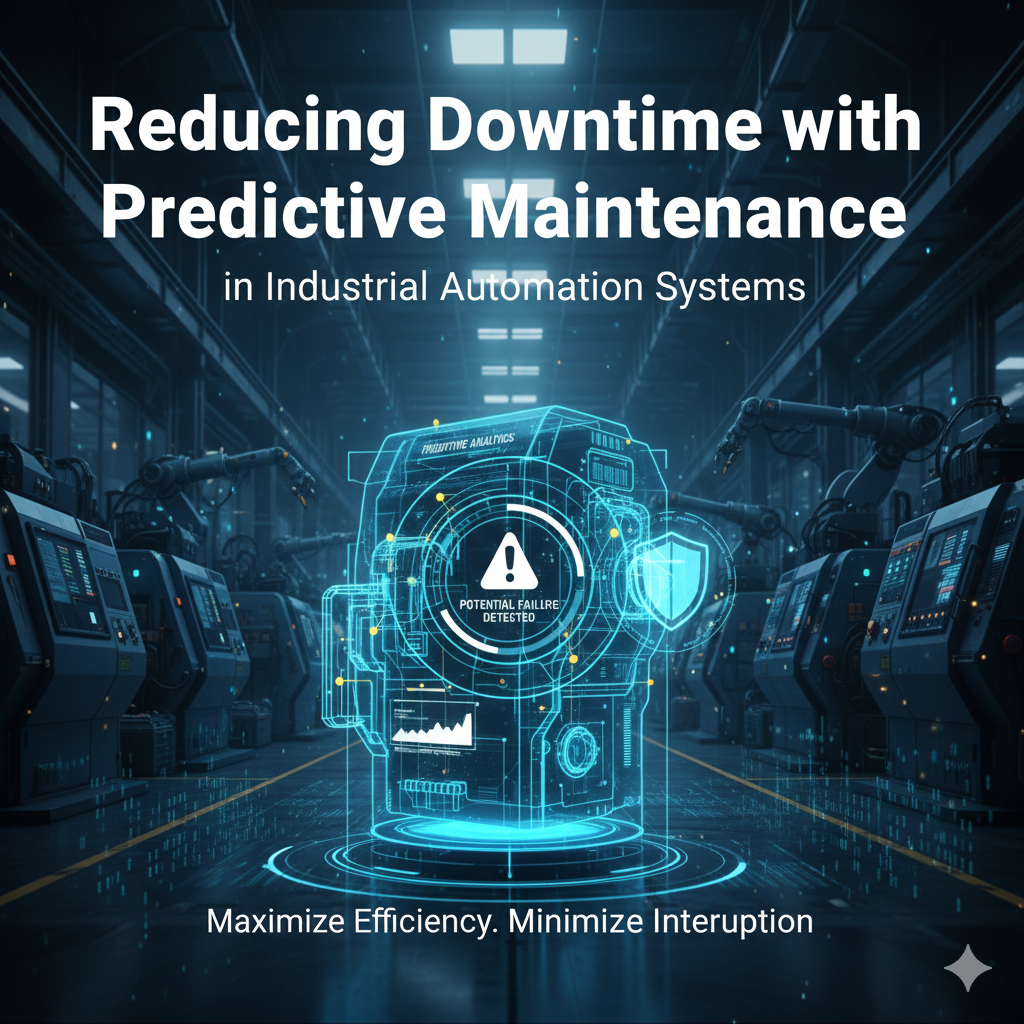
The solution lies in Predictive Maintenance (PdM), which uses Industrial Automation Systems to forecast failures before they occur. PdM transforms maintenance from a cost center into a strategic asset. At Pronto System Solutions, we leverage the Ignition Platform to shift our clients—from specialized manufacturers in Stamford to larger operations in Hartford—from reacting to breakdowns to proactively preventing them, significantly reducing downtime.
Preventive vs. Predictive: The Simple Analogy
To understand the power of PdM, consider this simple analogy:
- Preventive Maintenance (PM): This is like changing the oil in your car every 3,000 miles, regardless of how you drive. You waste oil if you haven’t driven much, and you risk engine failure if you’ve been towing heavy loads in extreme heat. It’s based on the calendar, not condition.
- Predictive Maintenance (PdM): This is like your car telling you, “My oil is getting too hot and the pressure is dropping. I predict engine damage will occur in the next 100 miles if I don’t get maintenance.” It’s based on real-time condition.
In Industrial Automation Systems, PdM uses sensors to constantly monitor the actual health of your equipment. It stops the cycle of premature maintenance and eliminates the high cost associated with critical failures, helping US manufacturing facilities run smarter, not harder.
The Technology Behind Downtime Reduction
How do you teach a machine to predict its own failure? It requires three key components, all managed through a robust platform like Ignition:
1. Smart Sensors (The Machine’s Eyes and Ears)
Instead of relying on simple “on/off” signals, PdM uses specialized sensors to measure the subtle, early indicators of failure. These include:
- Vibration: Monitoring for subtle shifts in vibration patterns, which often signal bearing failure or misalignment long before the machine makes an obvious noise.
- Temperature: Tracking heat fluctuations in motors, pumps, or gearboxes. Excess heat is the #1 killer of electrical and mechanical components.
- Amperage/Power Consumption: A motor drawing significantly more power than normal often indicates excessive friction or impending mechanical failure.
2. Advanced Analytics and Machine Learning
The Ignition Platform collects this massive stream of data and applies analytics. It doesn’t just check if the temperature is too high; it learns the equipment’s normal operating signature over time.
- The Learning Curve: The system learns that Machine A in your Connecticut facility normally runs at 180°C. If the temperature jumps suddenly to 200°C, that’s an issue. If it slowly climbs from 180°C to 185°C over two weeks, that’s a predictive warning that something is gradually failing.
This intelligence is what truly enables downtime reduction by providing an accurate timeframe for necessary repairs.
Strategic PdM Implementation: The Pronto Method
Implementing Predictive Maintenance doesn’t mean sensor-fitting every machine on day one. Pronto System Solutions focuses on a strategic, phased approach to maximize the ROI (Return on Investment) for our clients in Industrial Automation Systems:
1. Target Critical Assets First
We identify the machines that are most vital to your production schedule and the most expensive to repair (i.e., the bottlenecks). By focusing PdM efforts on these critical assets, the return on your investment in sensors and the Ignition Platform is immediate and highly visible to management.
2. Set Smart Warning Thresholds
A simple warning isn’t enough. Our systems are configured to generate tiered alerts:
- Level 1 (Warning): The condition is abnormal (e.g., vibration is 10% above baseline). This triggers a notification for planned scheduling.
- Level 2 (Alarm): Failure is highly likely within a specific timeframe (e.g., 48 hours). This triggers an emergency maintenance work order, allowing the team to prepare tools and parts.
This tiered system prevents alarms from being ignored, ensuring focused downtime reduction.
3. Integrating Maintenance Workflow
The power of PdM is realized when the prediction triggers an action. Pronto integrates the Industrial Automation System with your existing maintenance software (CMMS/ERP).
- Result: When the Ignition Platform predicts failure on a motor in your US manufacturing facility, it automatically generates a digital work order, reserves the necessary spare part in inventory, and alerts the relevant technician—all without any human interference.
4. Measuring Success: Before-and-After Metrics
To prove the value of PdM, we help managers track key metrics:
- Reduction in Unplanned Downtime: The most obvious metric.
- Increase in Mean Time Between Failures (MTBF): Showing the equipment is running longer between outages.
- Decrease in Inventory Costs: Since you know exactly when a part is needed, you don’t need to stockpile expensive spares “just in case.”
This clear documentation solidifies the value of Predictive Maintenance as a core component of your automation strategy.
Your Partner in Smart Industrial Automation
For Connecticut manufacturing facilities seeking genuine downtime reduction, relying solely on calendar-based maintenance is a major liability. Pronto System Solutions implements state-of-the-art Predictive Maintenance using the flexible and powerful Ignition Platform. We provide the analytical intelligence needed to transform your maintenance strategy and secure your competitive edge across the USA.