
How MES in Manufacturing Works with SCADA to Drive Smart Factory Success
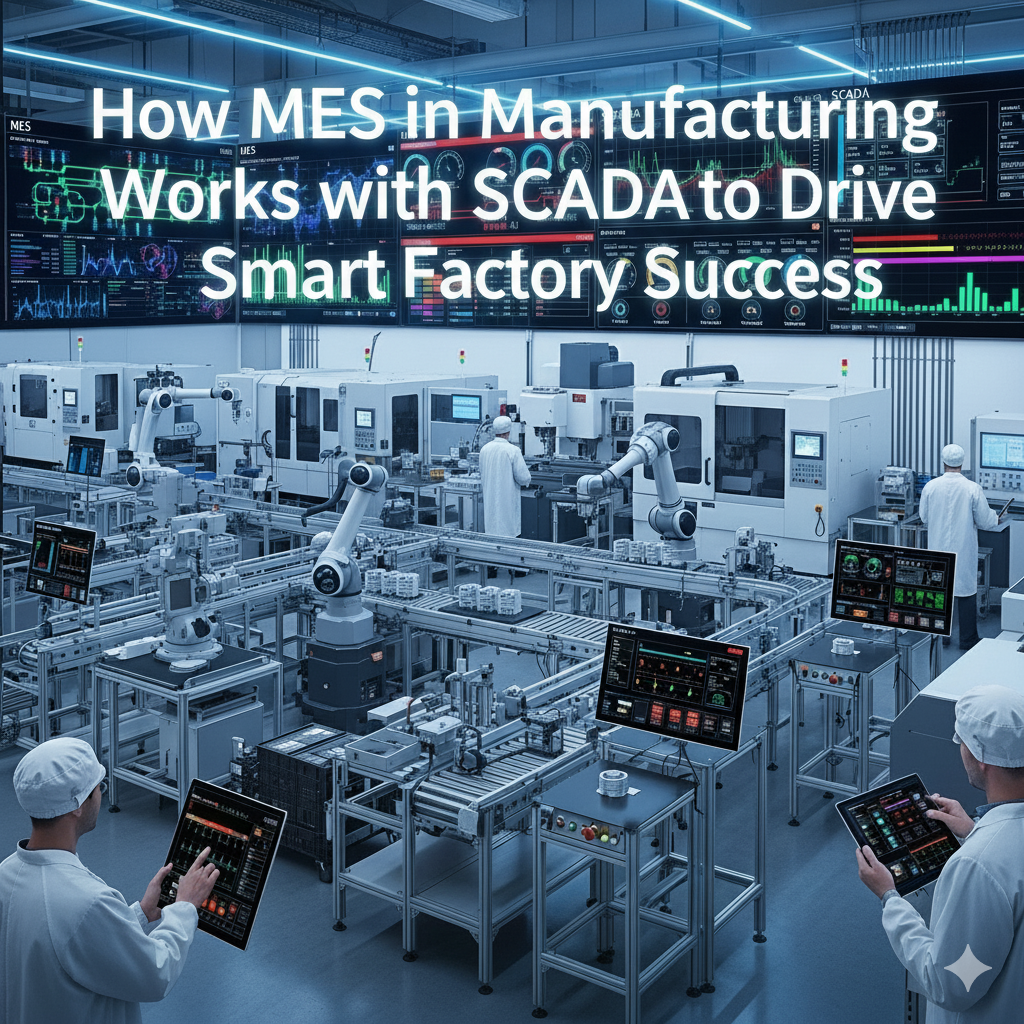
Discover how MES in manufacturing integrates with SCADA to enable smart factory success, real-time visibility, and data-driven operations.
Manufacturing Execution Systems (MES) and Supervisory Control and Data Acquisition (SCADA) software play complementary roles in smart factory environments. While MES orchestrates production workflows, SCADA ensures real-time monitoring and automation control.
What Is MES in Manufacturing?
MES software acts as the bridge between enterprise resource planning (ERP) and shop-floor operations. It manages scheduling, work orders, and quality control.
Key Functions of MES:
– Production Scheduling
– Resource Allocation
– Quality Management
– Data Collection & Traceability
How MES and SCADA Work Together
SCADA collects and monitors real-time data, while MES uses this data to optimize production plans.
Example:
– SCADA tracks machine temperature and efficiency.
– MES adjusts the production schedule if a bottleneck arises.
Benefits of Integrating MES with SCADA
– Enhanced Productivity: Streamlined scheduling with real-time visibility.
– Faster Decision-Making: Data-driven actions improve responsiveness.
– Improved Compliance: Complete traceability ensures regulatory adherence.
– Cost Savings: Reduction in downtime and scrap rates.
Real-World Example
A pharmaceutical factory integrates MES and SCADA. SCADA captures batch data while MES ensures compliance with FDA regulations.
Future Outlook: AI-Powered MES + SCADA
The integration of AI allows predictive scheduling, adaptive workflows, and advanced analytics in manufacturing.