What Is a SCADA Process Monitoring System? Components, Benefits, and Applications
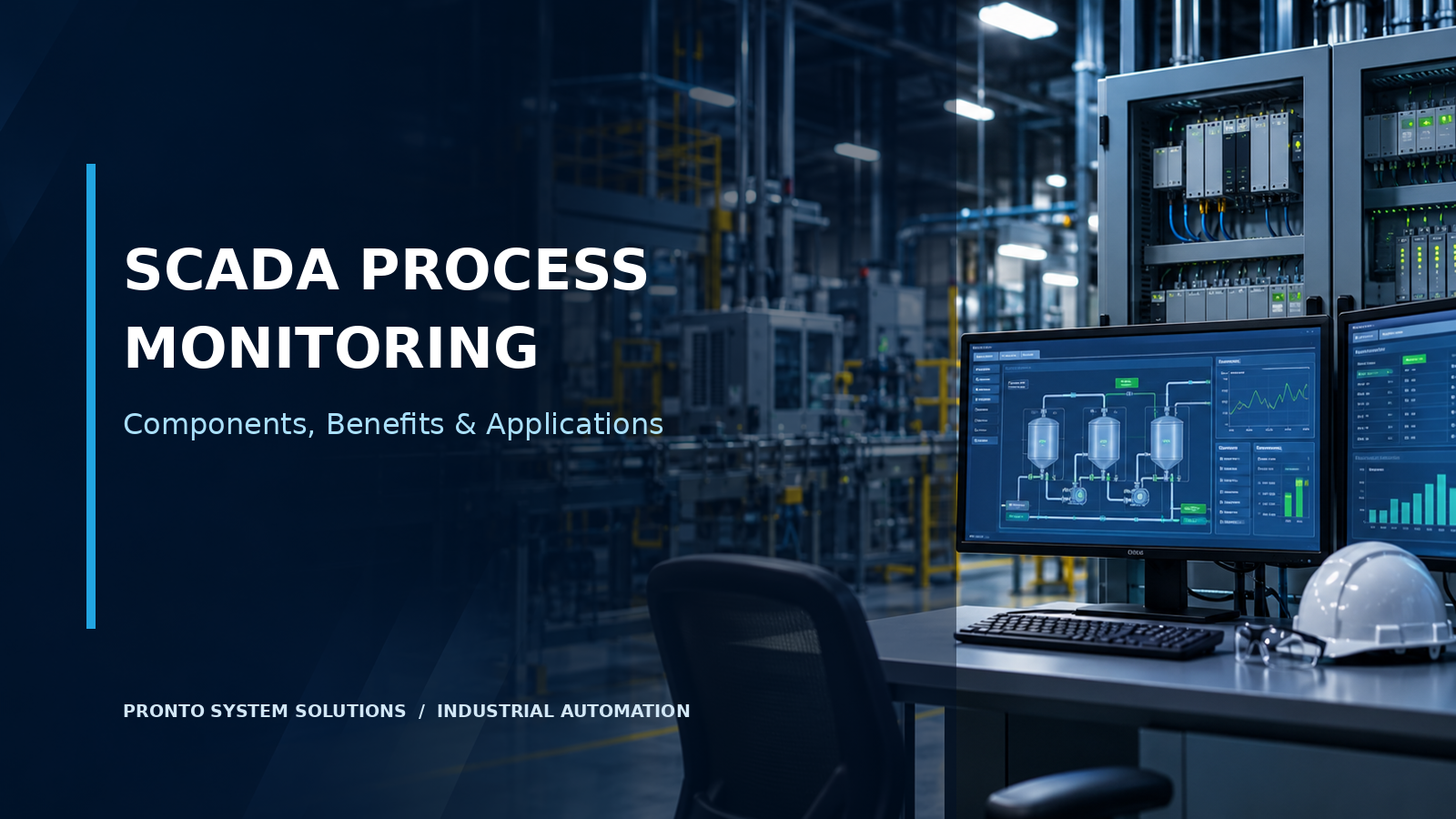
What is a SCADA process monitoring system?
A SCADA process monitoring system is an industrial architecture that gathers operating data from equipment and controllers, presents it to users in real time, stores historical records, and supports supervisory decisions or authorized control actions. SCADA stands for Supervisory Control and Data Acquisition. It is commonly used to monitor temperatures, pressures, flows, motor states, counts, and alarms across a process or facility.
What components make up the system?
Field sensors and instruments measure the physical process. PLCs or remote terminal units read inputs and execute local logic. Industrial networks and communication protocols move data to SCADA servers or gateways. HMIs show operating status, alarm systems notify users, and historians or databases preserve trends and events. Reporting, identity management, backups, and integration interfaces complete a production-ready design.
How does data travel from machine to dashboard?
A sensor produces a signal that a PLC reads and validates. The PLC exposes relevant values through a supported interface. The SCADA gateway polls or subscribes to those values, applies names and engineering units, and displays them on a screen. Selected events and measurements are recorded for trend analysis. Communication loss and stale data must be clearly distinguished from normal operating values.
What benefits can monitoring provide?
Reliable visibility can reduce time spent manually collecting readings, improve troubleshooting, support earlier detection of abnormal conditions, and produce consistent records for maintenance and quality reviews. Results are not automatic: benefits depend on sensor quality, alarm design, operator adoption, and a defined response process. Establish a baseline before estimating savings.
Where is SCADA process monitoring used?
Common applications include manufacturing lines, material handling, batch processing, utilities, water treatment, energy systems, and temperature-sensitive production. A wire-production facility might trend line speed, inspection measurements, temperature, and product identifiers. A distribution facility might monitor conveyors, motor faults, and throughput by zone. Each application requires different data frequency and alarm priorities.
How should a manufacturer implement it?
Start with one costly or poorly understood process. Define operational questions, required signals, data quality thresholds, and operator actions. Validate connectivity and cybersecurity with a small pilot. Then build a clear dashboard, test alarms, verify historian records, train users, and review measured outcomes before scaling. Pronto’s published capabilities include HMI/SCADA, legacy devices, data logging, and SQL integration.
Frequently asked questions
What is the difference between SCADA and HMI? An HMI is the operator interface; SCADA includes broader supervisory data acquisition, alarming, history, and integration.
Does SCADA replace PLCs? Generally no. PLCs continue to perform deterministic local control while SCADA provides supervision and visibility.
Can SCADA monitor multiple facilities? Yes, when architecture, connectivity, permissions, resilience, and cybersecurity are designed for multi-site operation.