How to Choose an Ignition SCADA Integrator in Connecticut: A Practical Guide
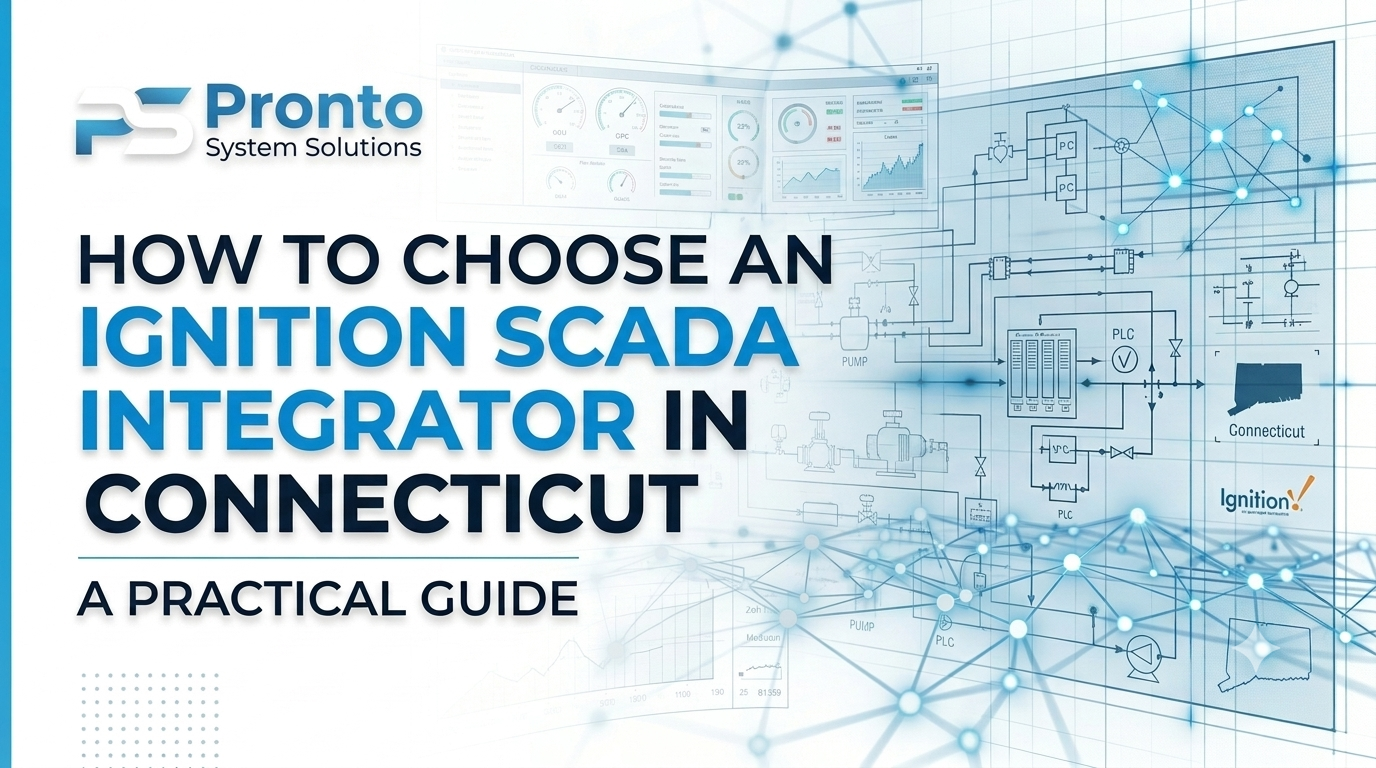
Choosing the right Ignition SCADA integrator in Connecticut can have a major impact on the success of a manufacturing automation project.
Buying the Ignition platform is only one part of the process. The integrator you choose may be responsible for connecting PLCs and machines, designing SCADA screens, configuring data collection, developing dashboards, integrating databases, connecting MES or ERP systems, and supporting the system after deployment.
For Connecticut manufacturers, the right integrator should understand both Ignition software and the realities of industrial automation on the plant floor.
What Does an Ignition SCADA Integrator Do?
An Ignition SCADA integrator helps manufacturers design, configure, implement, and support Ignition-based automation and monitoring systems.
Depending on the project, an integrator may handle:
- PLC and equipment integration
- SCADA development
- HMI development
- Industrial communication
- SQL database integration
- Historical data collection
- Production dashboards
- Alarm management
- MES integration
- ERP connectivity
- Remote monitoring
- System upgrades and modernization
This is important because a SCADA system needs to work with the equipment and processes already operating in the facility.
Pronto System Solutions, for example, provides Ignition SCADA solutions alongside PLC programming, electrical design, MES, and automation integration.
Why Choosing the Right Integrator Matters
Two companies can use the same SCADA platform and still end up with very different results.
A poorly planned system can become difficult to maintain, difficult for operators to use, or difficult to expand.
A well-designed system can provide:
- Better production visibility
- Reliable machine data
- Easier troubleshooting
- Better downtime tracking
- Improved reporting
- Scalable architecture
- Easier integration with other systems
The goal should not simply be to install Ignition. The goal should be to build a system that solves a specific manufacturing problem and can support future requirements.
7 Things to Look for in an Ignition SCADA Integrator
1. Experience With Ignition and Industrial Automation
Your integrator should understand more than the Ignition interface.
They should be comfortable working with:
- PLCs
- HMIs
- Industrial networks
- Sensors
- Machines
- SQL databases
- SCADA architectures
- Manufacturing processes
This becomes especially important when a facility has equipment from multiple manufacturers.
A Connecticut plant may have Allen-Bradley, Siemens, Modbus, and legacy equipment operating together. The integrator should understand how these systems can communicate within the proposed architecture.
2. Experience With Existing and Legacy Equipment
Replacing every machine is not always practical.
An experienced integrator should be able to evaluate existing equipment and determine what can be connected, upgraded, or retained.
For example, Ignition can be integrated with legacy systems using appropriate communication methods, allowing manufacturers to modernize data collection and visualization without necessarily replacing the entire production line. Pronto has specifically addressed Ignition integration with legacy automation systems in its existing technical guidance.
Ask the integrator:
“Can you work with our existing PLCs and machines?”
The answer should be based on an assessment of your actual equipment rather than a recommendation to replace everything.
3. Ability to Connect SCADA With Other Systems
SCADA rarely operates completely on its own.
A modern manufacturing environment may require connections between:
PLC → SCADA → SQL Database → MES → ERP
Your integrator should understand how these systems can exchange information.
For example, manufacturers may want to use production data for:
- OEE
- Downtime analysis
- Quality tracking
- Production reporting
- Traceability
- Maintenance
- Business reporting
Pronto’s current SCADA offering specifically covers data collection, historical data, process control, reporting, and integration of industrial devices and systems.
4. A Clear Approach to System Architecture
Before development begins, ask the integrator to explain the proposed architecture.
You should understand:
- Where the Ignition Gateway will run
- How PLCs will communicate
- Where historical data will be stored
- How users will access the system
- How backups will work
- How additional machines can be added later
- How the system will connect with other applications
A good architecture should solve today’s requirements without creating unnecessary limitations for tomorrow.
5. Strong Understanding of Manufacturing Operations
SCADA is not just an IT project.
The integrator should understand how operators, maintenance teams, engineers, and production managers actually use the system.
For example, an operator may need:
- Simple machine status
- Clear alarms
- Production counts
- Easy controls
A production manager may need:
- OEE
- Production trends
- Downtime information
- Shift reports
Maintenance may need:
- Equipment alarms
- Fault history
- Runtime information
- Diagnostic information
The best SCADA applications are designed around these real operational requirements.
6. Support After Implementation
SCADA projects do not necessarily end when the system goes live.
Manufacturers may later need:
- New machines added
- New dashboards
- PLC modifications
- Additional reports
- System troubleshooting
- Software upgrades
- Data integrations
- Operator training
Before selecting an integrator, ask what support is available after implementation.
Local support can also be valuable when an issue requires someone to understand the physical equipment and plant environment, not just the software.
Pronto specifically emphasizes local implementation and support as an important part of deploying Ignition for Connecticut manufacturers.
7. A Clear Project Scope
A professional integrator should clearly define what is included in the project.
The scope may include:
- Engineering
- PLC programming
- Ignition configuration
- HMI/SCADA development
- Database setup
- Testing
- Documentation
- Training
- Commissioning
- Support
Ask for a clear explanation of what is included and what would be considered additional work.
This can prevent unexpected costs and delays later in the project.
Questions to Ask Before Hiring an Ignition Integrator
Before selecting a partner, Connecticut manufacturers should consider asking:
- How much Ignition experience do you have?
- Have you worked with PLCs similar to ours?
- Can you integrate our existing or legacy equipment?
- Can you connect Ignition with our SQL, MES, or ERP systems?
- How will you design the SCADA architecture?
- Who will provide on-site support during commissioning?
- Will documentation and operator training be included?
- What ongoing support is available after implementation?
- Can the system be expanded as our plant grows?
- Can you provide relevant manufacturing project examples or references?
These questions can help separate a software developer from a true industrial automation and SCADA integration partner.
Local vs. Remote Ignition Support
For some software projects, remote support may be sufficient.
Industrial automation can be different.
When a problem involves a PLC, machine, network, electrical panel, sensor, or production process, someone may need to understand what is physically happening on the plant floor.
For Connecticut manufacturers, working with a local or regionally available integrator can provide advantages such as:
- Faster on-site response
- Familiarity with local manufacturing operations
- Easier commissioning
- Better understanding of physical equipment
- Ongoing plant support
The right choice ultimately depends on the complexity and requirements of the project.
What Should an Ignition SCADA Project Include?
A typical project may involve several stages:
1. Assessment
Review existing equipment, controls, networks, processes, and business requirements.
2. Architecture
Determine how PLCs, Ignition, databases, MES, and other systems will connect.
3. Development
Build SCADA screens, dashboards, alarms, data collection, reports, and required applications.
4. Integration
Connect Ignition with PLCs, machines, databases, and other manufacturing systems.
5. Testing
Validate communications, tags, alarms, controls, data, and system functionality.
6. Commissioning
Deploy the system and verify operation in the production environment.
7. Training and Support
Train users and provide ongoing technical support.
This structured approach helps reduce implementation problems and makes the final system easier to maintain.
How Pronto System Solutions Can Help Connecticut Manufacturers
Pronto System Solutions provides Ignition SCADA, PLC programming, MES, electrical design, and factory automation integration services.
Its SCADA capabilities include data collection, process monitoring, historical data, reporting, HMI development, and integration with industrial equipment.
Pronto also offers automation assessments, system architecture recommendations, PLC programming updates, existing-equipment integration, plant-wide SCADA implementation, and legacy system modernization.
For a Connecticut manufacturer evaluating an Ignition SCADA integrator, this combination of software, controls, and manufacturing experience can be important when the project involves more than simply configuring SCADA screens.
Frequently Asked Questions
What is an Ignition SCADA integrator?
An Ignition SCADA integrator is a company or engineering team that designs, develops, configures, and integrates Ignition with PLCs, machines, databases, and other manufacturing systems.
How do I choose an Ignition integrator in Connecticut?
Look for an integrator with proven Ignition experience, PLC and industrial automation knowledge, legacy equipment experience, manufacturing project experience, clear project scopes, and ongoing support capabilities.
Does an Ignition integrator need PLC programming experience?
For many manufacturing projects, PLC knowledge is highly valuable because SCADA systems depend on communication with PLCs and other industrial control equipment.
Can Ignition connect to legacy PLCs?
In many cases, yes. The available approach depends on the PLC, communication protocol, hardware, and existing controls architecture. A qualified integrator should assess the equipment before recommending an integration method.
Should I choose a local Connecticut SCADA integrator?
A local integrator can be particularly useful when a project requires plant-floor commissioning, troubleshooting, equipment integration, or on-site support.
What does an Ignition SCADA project typically cost?
The cost depends on the number of machines, PLCs, screens, tags, integrations, databases, reports, and other requirements. A proper assessment is needed before providing a meaningful project estimate.
Final Takeaway
Choosing an Ignition SCADA integrator in Connecticut is about more than finding someone who knows how to configure Ignition.
The right partner should understand PLCs, industrial automation, manufacturing processes, data architecture, SCADA, MES, databases, and the equipment already operating in your plant.
For Connecticut manufacturers, the best integrator is one that can help move from a specific operational problem to a practical solution—while creating a SCADA architecture that can grow with the business.
If your facility is evaluating Ignition SCADA, legacy equipment integration, PLC upgrades, MES connectivity, or plant-wide automation, Pronto System Solutions can provide an assessment and help develop an implementation roadmap for your manufacturing operation.