
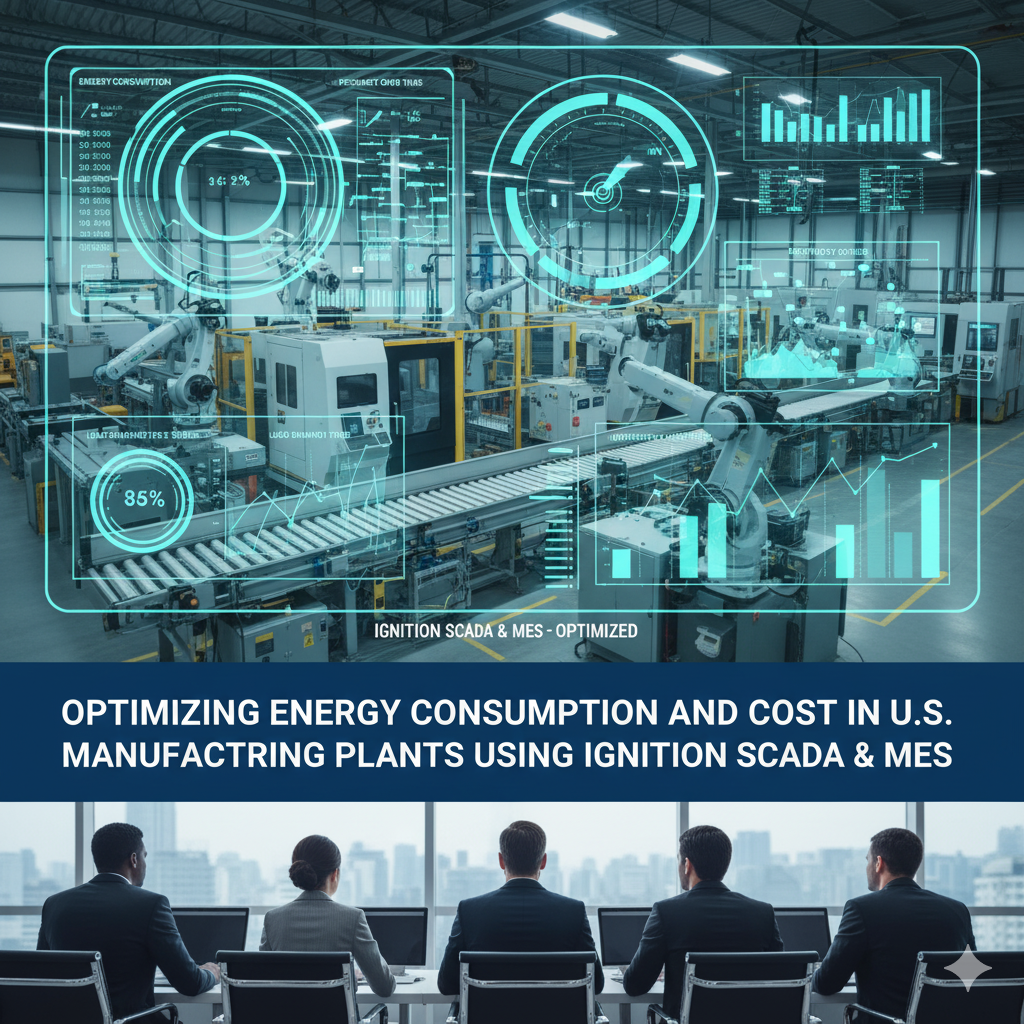
Optimizing Energy Consumption and Cost in U.S. Manufacturing Plants Using Ignition SCADA & MES
Introduction
Energy costs remain one of the top operating expenses for U.S. manufacturers. According to the U.S. Department of Energy, industrial facilities account for over 30% of total U.S. energy consumption. For manufacturers facing rising energy prices and tighter sustainability regulations, reducing waste and improving efficiency isn’t just good for the environment it’s critical for profitability.
This is where Ignition SCADA (Supervisory Control and Data Acquisition) and MES (Manufacturing Execution Systems) step in. Together, they provide real-time visibility, analytics, and control over energy usage at the machine, line, and plant levels.
Why U.S. Manufacturers Struggle with Energy Optimization
Despite widespread awareness, many plants still face challenges:
- Limited visibility into energy consumption per machine or process
- Siloed systems where PLC programming, shop floor control, and energy meters don’t talk to each other
- Reactive decision-making instead of predictive insights
- Inconsistent reporting that prevents benchmarking across shifts, lines, or sites
Without a unified SCADA + MES framework, energy data often remains trapped making it hard to identify inefficiencies or tie them back to production KPIs like OEE (Overall Equipment Effectiveness).
How Ignition SCADA & MES Drive Energy Efficiency
1. Real-Time Energy Monitoring
Ignition SCADA connects directly to PLCs, meters, and electrical control systems to capture live energy data. Manufacturers can:
- Track kWh usage per machine, shift, or product batch
- Visualize consumption trends in dashboards
- Set alerts when equipment exceeds baseline energy thresholds
This eliminates blind spots and turns raw data into actionable insights.
2. Linking Energy Data with OEE and MES
MES integration ensures that energy usage isn’t tracked in isolation. Instead, it’s linked with:
- OEE metrics (availability, performance, quality)
- Shop floor automation events (machine starts, stops, idle times)
- Production reporting (cost per unit, per shift, or per SKU)
This means a plant can quickly answer: “Which product runs are consuming the most energy per unit produced?” and take corrective action.
3. Machine Analytics and Predictive Insights
With machine analytics and machine reporting, manufacturers can identify energy-intensive operations and predict when equipment is drifting toward inefficiency. For example:
- Datalogging reveals if compressed air systems spike during certain shifts
- Anomaly detection highlights motors drawing higher-than-normal current
- Trend analysis supports predictive maintenance, reducing costly breakdowns
4. Automating Energy-Saving Actions
Ignition’s shop floor control capabilities allow plants to go beyond monitoring and into automation:
- Automatically power down idle machines
- Optimize HVAC and lighting schedules around production
- Trigger alerts if barcode scanners, conveyors, or printing label stations are left running unnecessarily
5. Compliance and Sustainability Reporting
For U.S. plants targeting EPA energy regulations or corporate ESG goals, Ignition simplifies compliance by:
- Providing auditable logs of energy usage
- Enabling standardized reports across multiple facilities
- Supporting ISO 50001 energy management certification efforts
Real-World Impact: U.S. Manufacturing Case Example
A Midwest automotive parts manufacturer implemented Ignition SCADA + MES to monitor real-time energy usage across its shop floor. Within 12 months, the plant:
- Reduced overall energy costs by 18%
- Improved OEE by 9% through data-driven production scheduling
- Identified energy waste at barcode reading and label printing stations, saving thousands annually
Conclusion
For U.S. manufacturers, energy efficiency is no longer optional it’s a competitive differentiator. By leveraging Ignition SCADA and MES, plants can gain real-time visibility, integrate energy data with production KPIs, automate cost-saving actions, and ensure compliance with U.S. standards.
The result? Lower energy bills, higher productivity, and a clear path toward sustainable growth.